
Ecommerce built to sell.
Designed to scale.
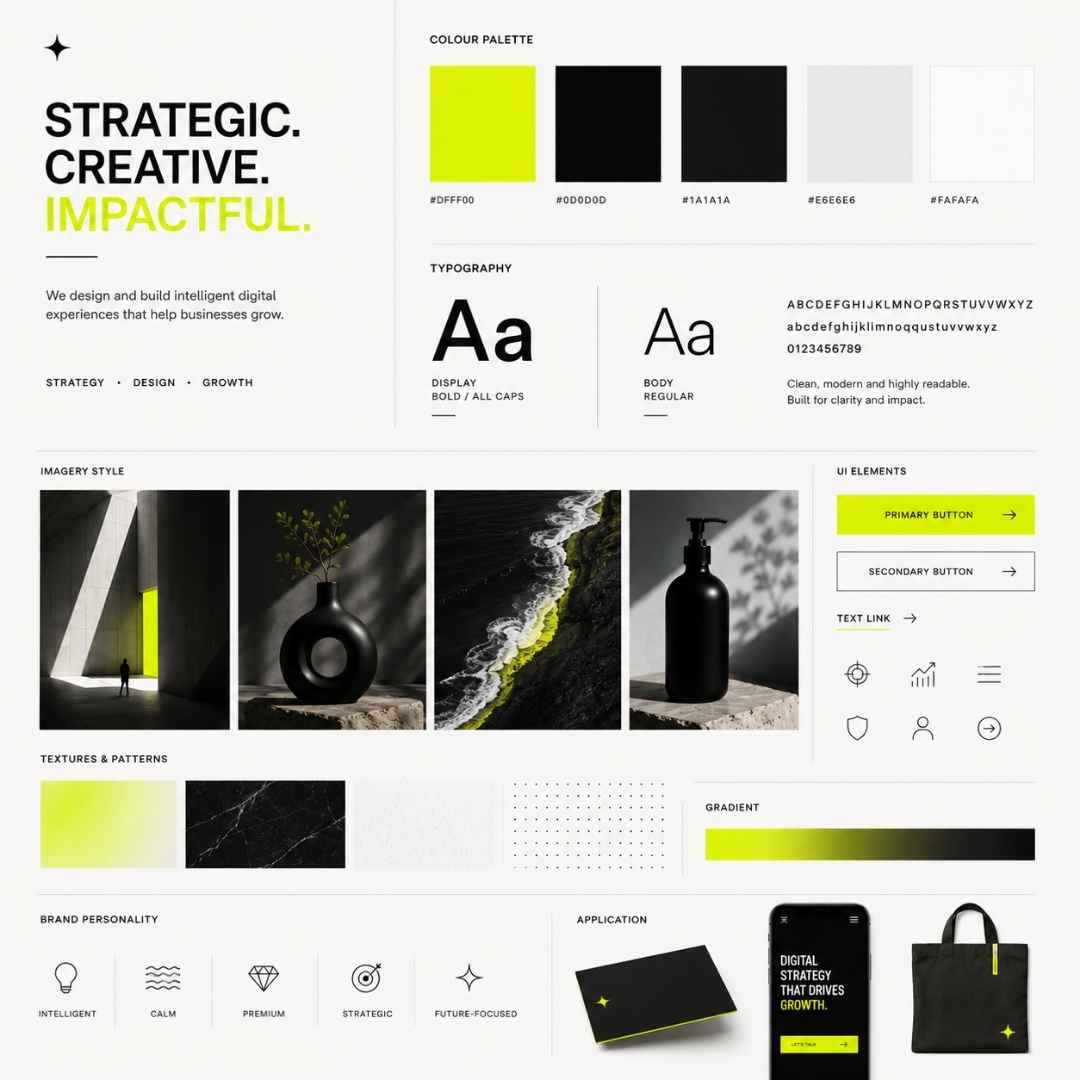
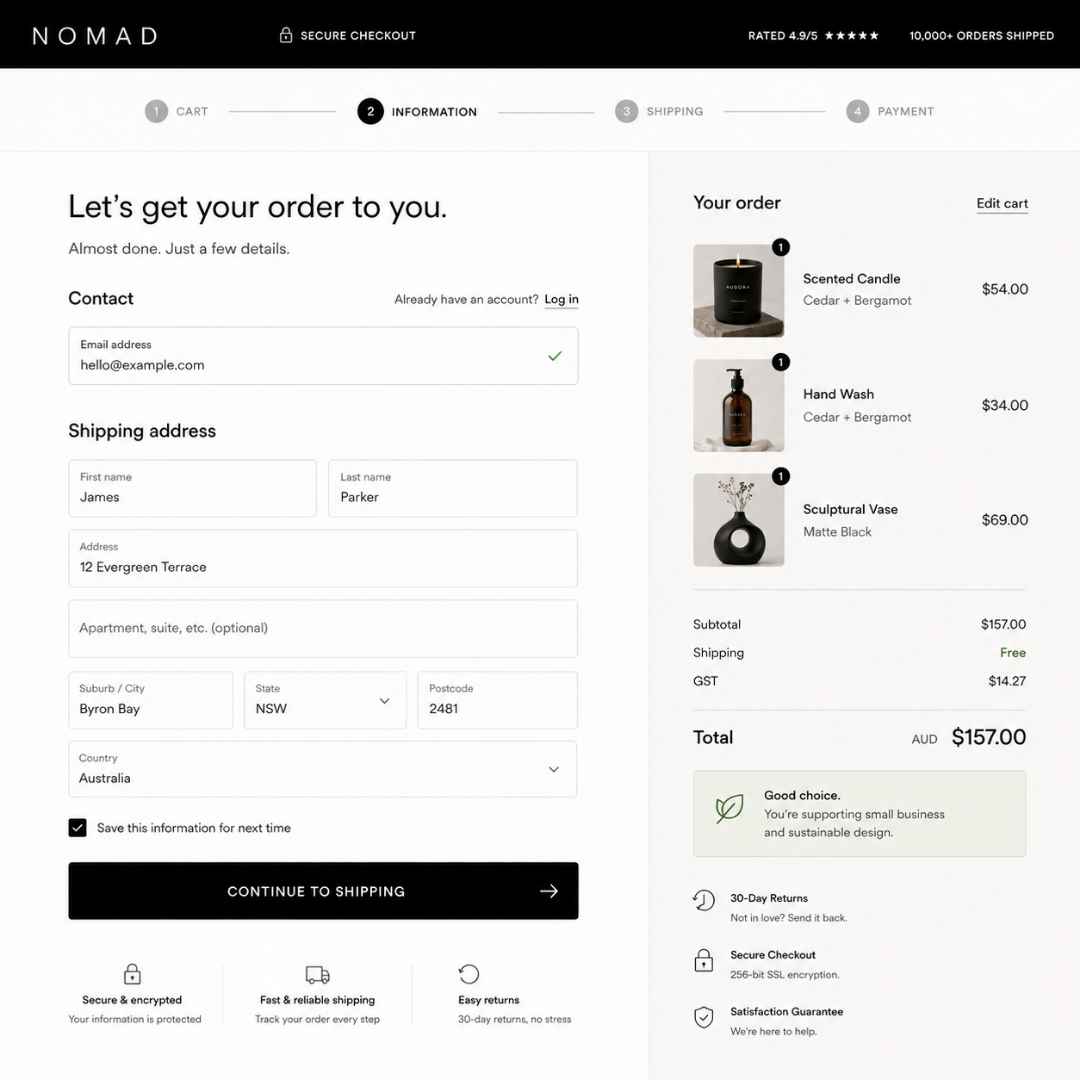
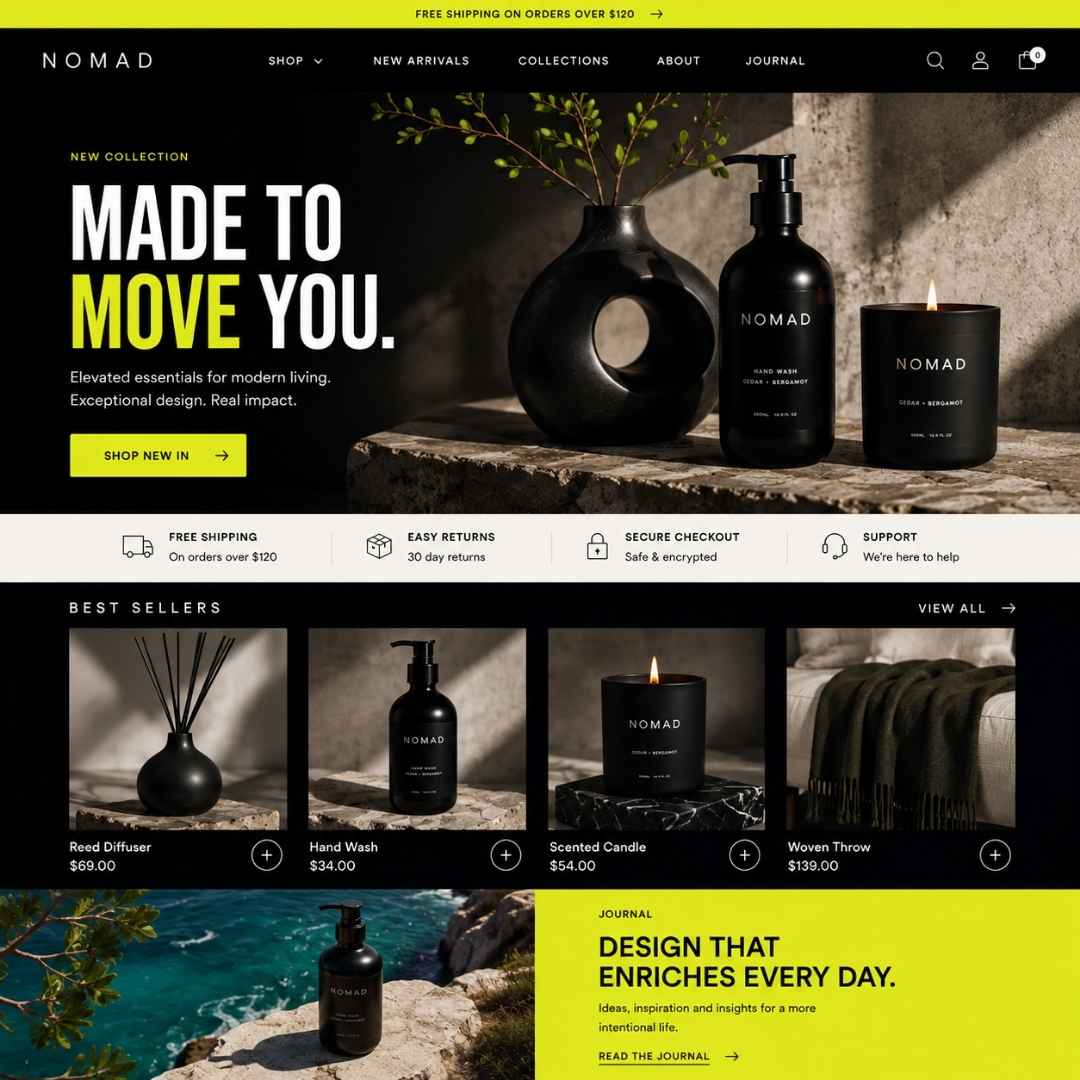
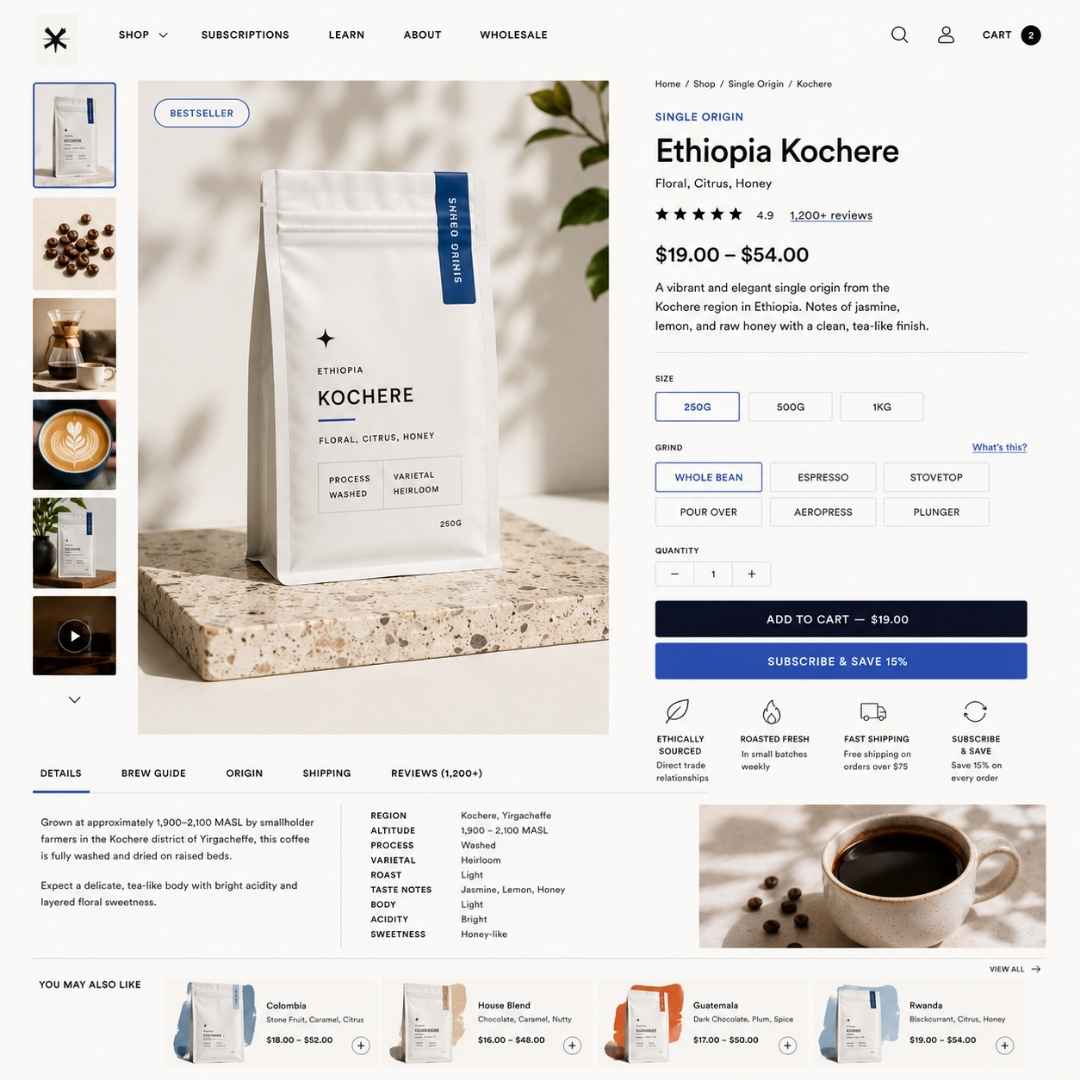
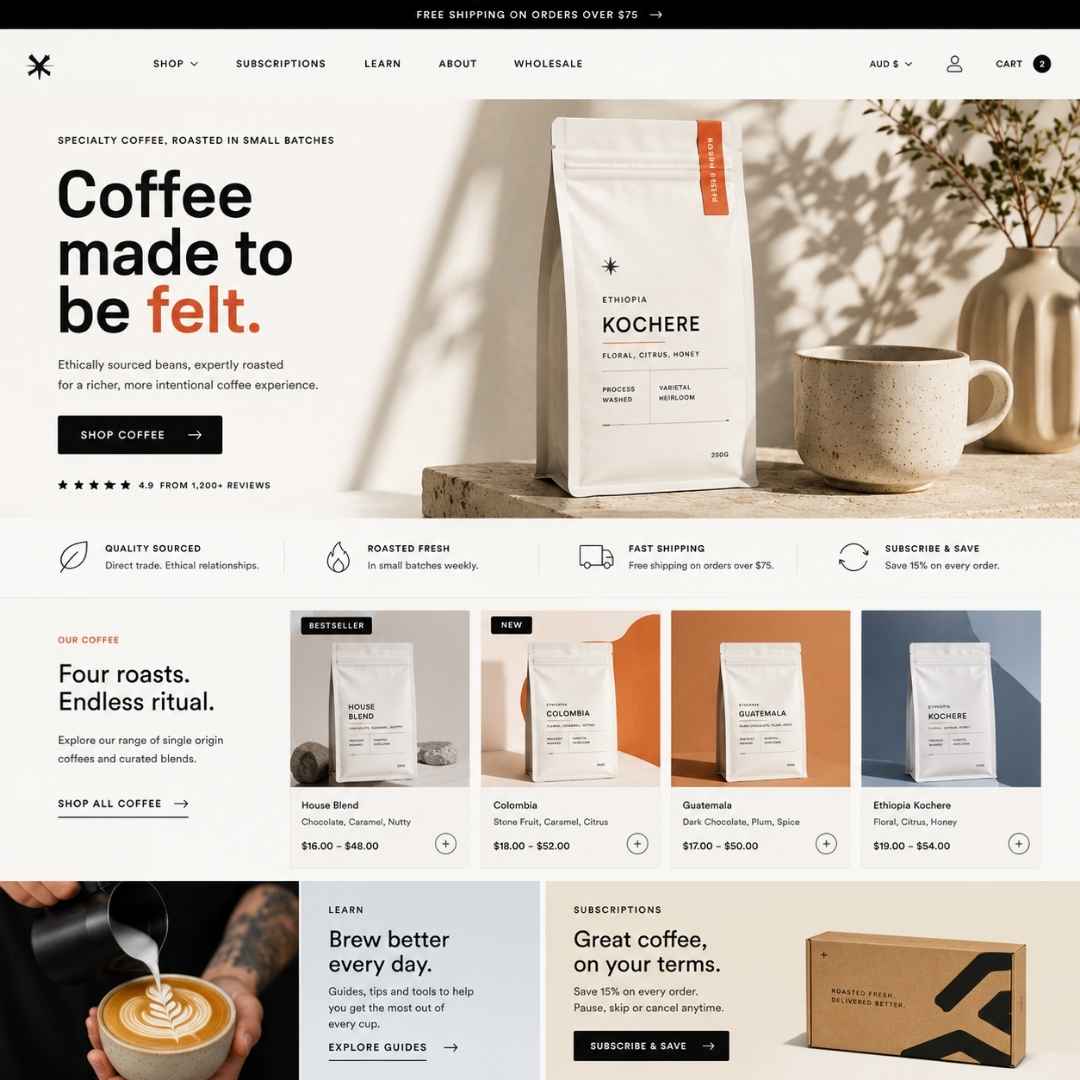
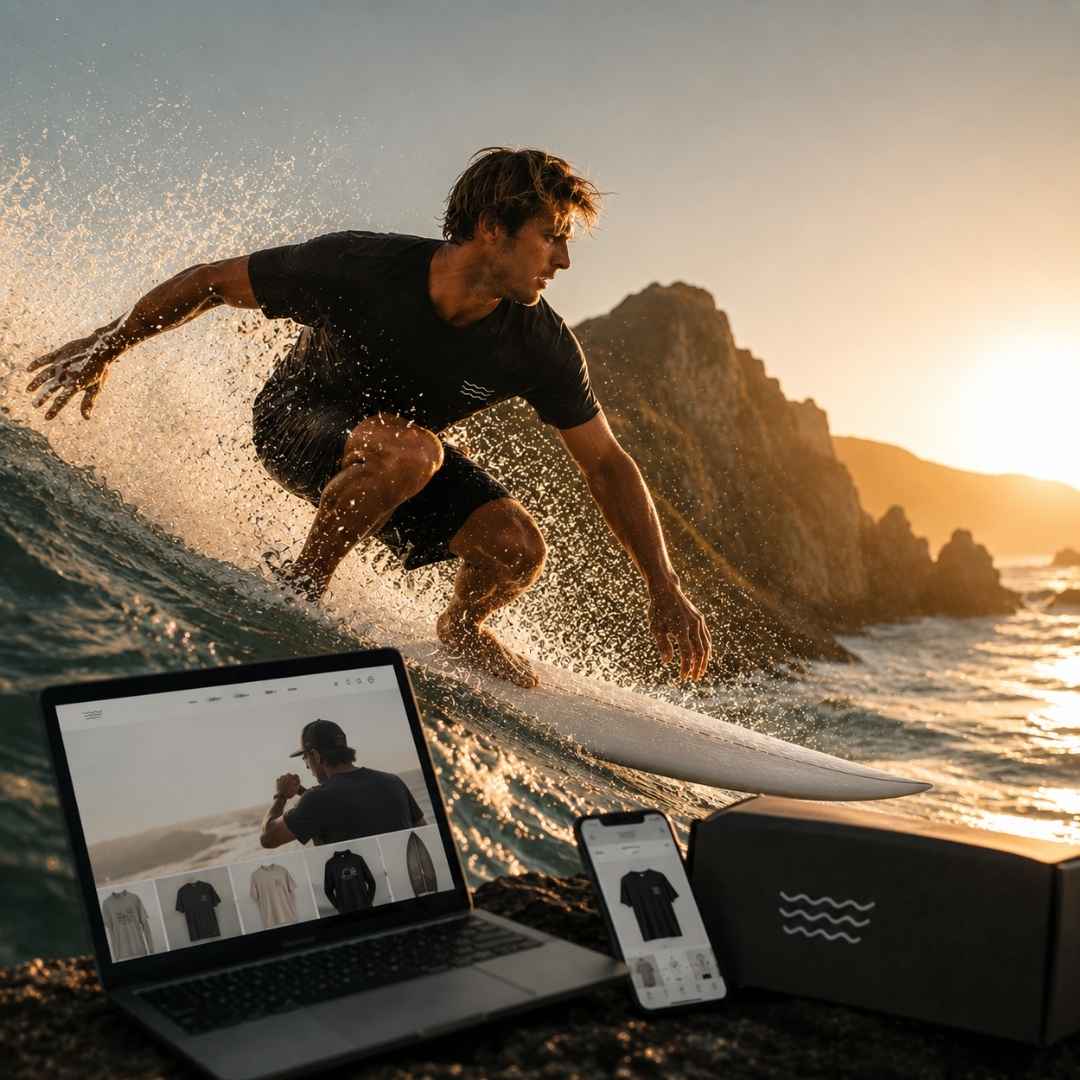
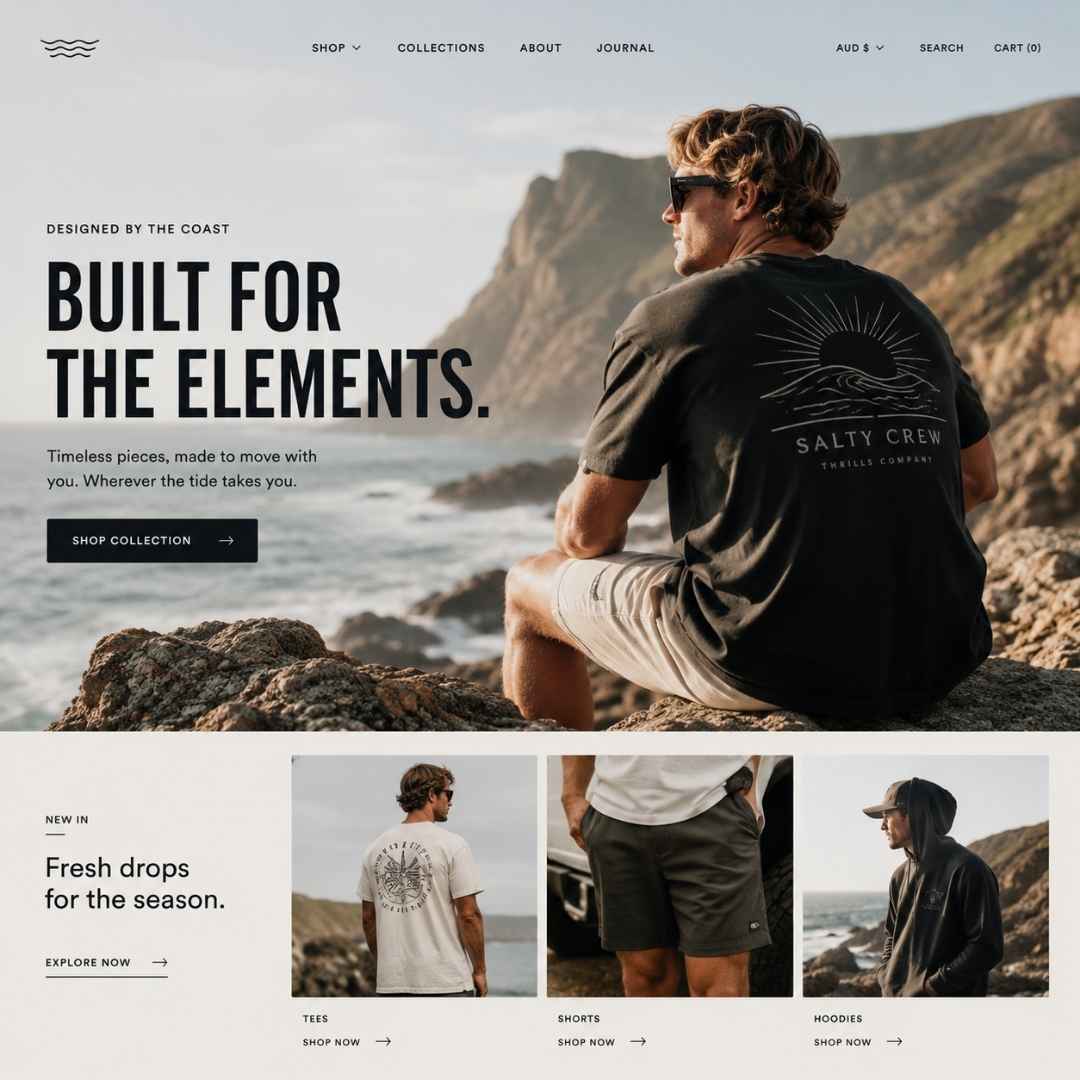
At Moonstruck, we create digital stores that stand out, move fast and drive growth.
We combine design, development and eCommerce expertise to make Shopify feel anything but off-the-shelf.

We create Shopify experiences that balance brand and performance. Design that earns attention. Structure that makes sense. Technology that disappears into the experience. Everything working together to make buying easier and growth more achievable.

We design eCommerce around how customers actually browse, decide and buy, creating faster, simpler experiences that convert.
Conversion → More browsers into buyers
Basket value → More value per order
Speed → Less waiting, less dropping off
Checkout → Fewer barriers to purchase
Mobile → Built for where people actually shop
Most online stores lose the sale before the cart.
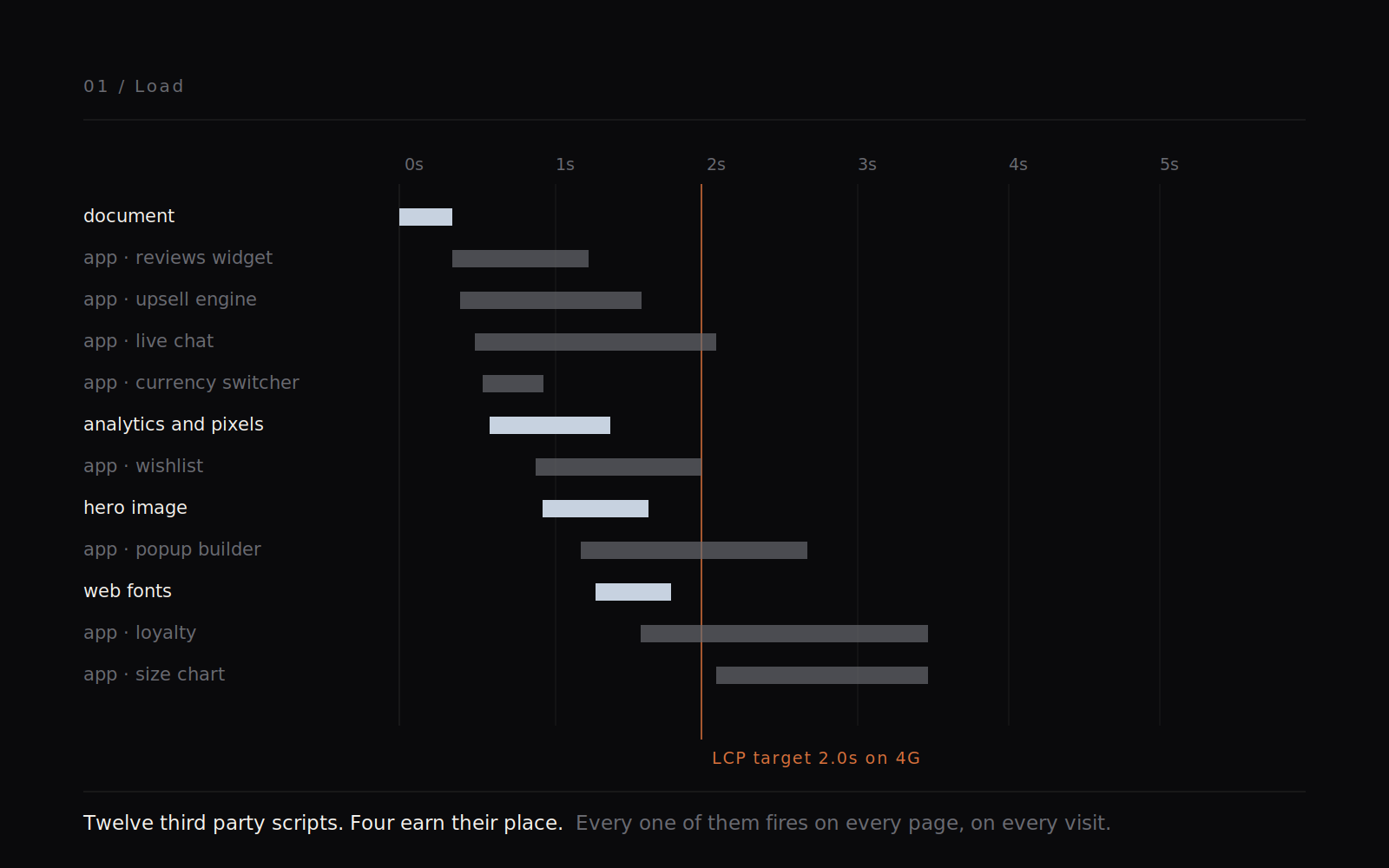
It loads too slowly
Every additional second of load time costs you conversions, and mobile shoppers on regional 4G feel it hardest. Most stores we inherit are carrying eight to fifteen apps that each inject scripts on every page. We audit what each one earns and remove the rest.
Misses the point
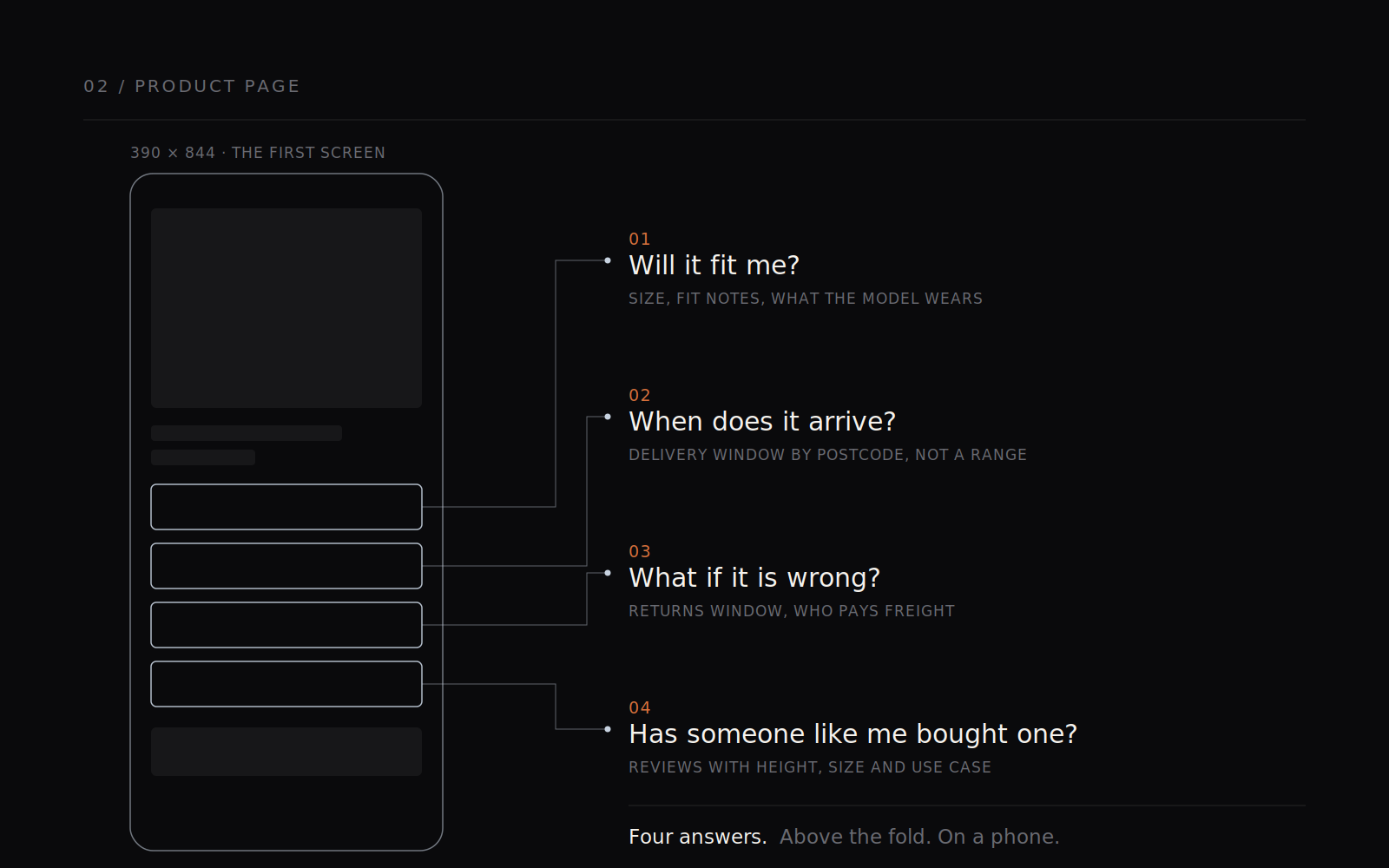
Shoppers are not asking what the product is. They are asking whether it will fit, how long it takes to arrive, what happens if it is wrong, and whether anyone like them has bought it. If a product page does not answer those four things above the fold on mobile, the sale happens somewhere else.
Mobile was secondary
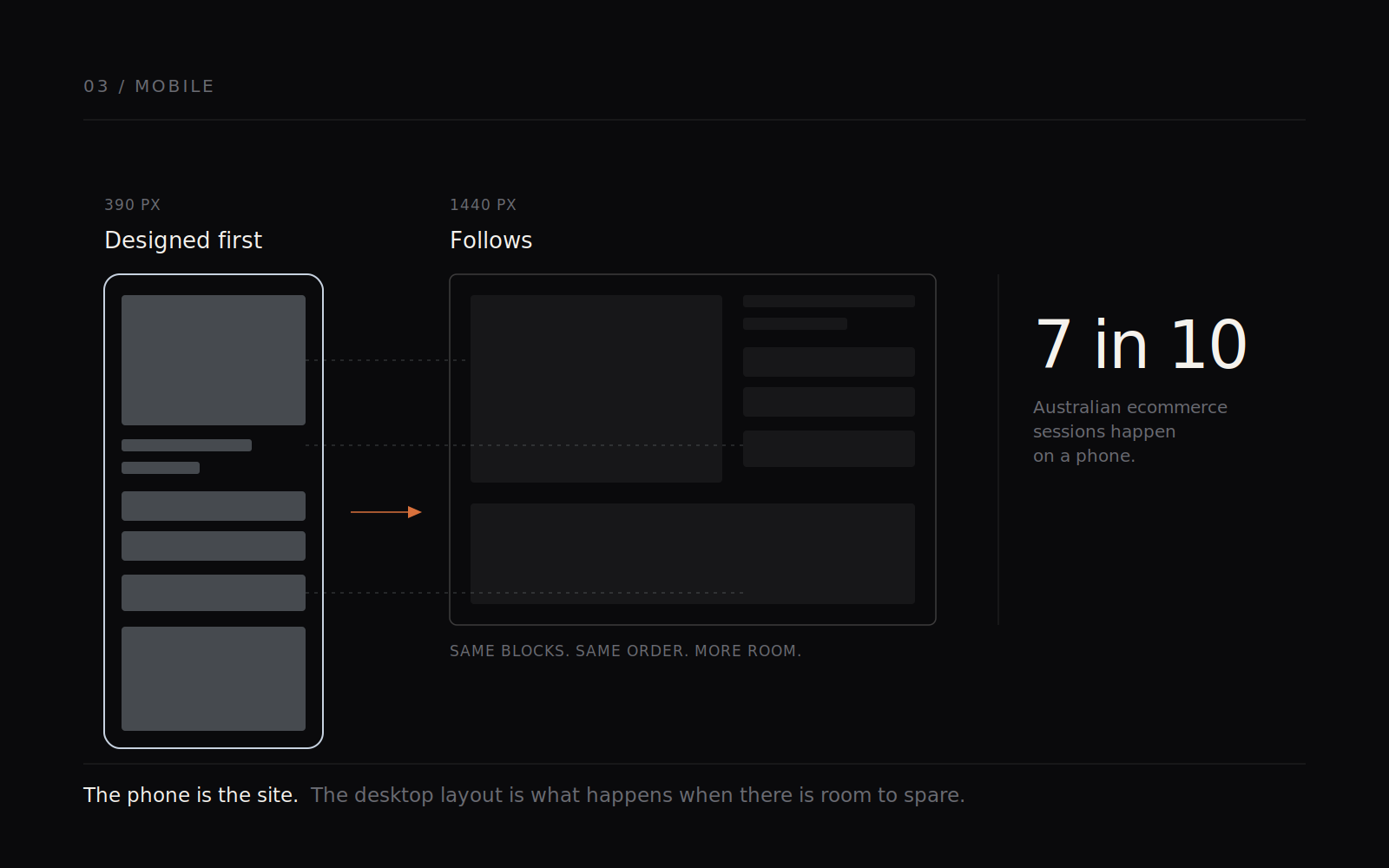
Around seven in ten Australian ecommerce sessions happen on a phone. Plenty of stores are still designed on a desktop artboard and squashed down afterwards. We design the 390px view first and let the desktop layout follow.
What a Moonstruck store includes.
Every store covers three fronts, and the scope is fixed in writing before design starts. Design sets how the store looks and how it holds up at 390px. Build is where your load time, your structured data and your migration either hold or fail. Growth is what runs after launch. All three, one scope.


Four stages, four weeks, no surprises.
Every stage ends with something in your hands. A written diagnosis in week 1, a full page set in week 2, a staging link in week 3, a live store in week 4. Dates are set before we start, and the price is fixed at the quote.
Map
We go through your analytics, your last 90 days of orders, your support inbox and your competitors. You get a written diagnosis of where the store is leaking, ranked by what it is costing you. This stage is chargeable and it is yours to keep, even if you take it elsewhere.
Design
Art direction, then the full page set in Figma. You see the mobile view first. Two rounds of revision are built into the price, and we would rather you use them.
Build
Development, product migration, integrations, tracking and QA across real devices. You get a staging link from day one of this stage, so nothing is a reveal.
Launch & tune
DNS cutover with redirects mapped, then twelve weeks of watching real user behaviour and fixing what the data shows. Launch is the start of the measurement, not the end of the job.
Shopify or Webflow: which one you actually need.
Choose Shopify if you sell more than about thirty products, need inventory sync, subscriptions, multi-currency or a warehouse integration. Choose Webflow Ecommerce if you sell a small, considered range and the design and content matter more than the catalogue logic. Most Sunshine Coast brands we speak to are a Shopify build. We will tell you if you are not, even though a Webflow build is the easier one for us to sell.
Best for catalogues over 30 SKUs, subscriptions, wholesale, multi-currency, apps and integrations, high order volume.
Tradeoff design freedom is bounded by the theme architecture, and app costs compound. We build on Online Store 2.0 with a custom theme rather than a bought one, so you are not paying to remove someone else’s code.
Best for 5 to 30 products, brand-led ranges, content-heavy stores, businesses that want to edit everything themselves.
Tradeoff fewer native ecommerce features, and no third-party app store to fall back on. Everything is designed exactly as drawn, and the CMS is genuinely easy for a non-technical team.
Your store should talk to the rest of your business.
An online store that does not connect to your inventory, your accounting or your customer records just moves the manual work somewhere else. We connect Shopify or Webflow to Xero, Unleashed, Cin7, Klaviyo, HubSpot, Google Merchant Centre, Australia Post and StarShipIT, and we automate the parts of order handling that a person should not be doing twice.
One client stopped re-keying 200 orders a week into their accounting system. That was eleven hours a week back, which is more than the automation cost to build.
See how we build intelligent systems →Built on the Sunshine Coast, shipping Australia wide.
We are based in Noosa and we work with brands from Noosa down to Caloundra, across Brisbane, and in every other state. Being local is genuinely useful for the first two weeks, when sitting in the same room with your products and your team is worth more than any call. After that, most of the work is the same wherever you are.
If you are on the Coast, we will come to you. If you are not, you will not be able to tell the difference.








Ecommerce questions we get asked.
How much does an ecommerce website cost in Australia?
A professionally designed and built online store in Australia generally costs between $4,000 and $15,000, depending on catalogue size, custom functionality and integrations. Template-based stores start lower, around $2,000 to $4,000, but usually need rebuilding within two years. At Moonstruck, a focused store starts at $4,000 and a full rebuild for an established retailer starts at $8,000.
How long does it take to build an online store?
A focused store takes four to six weeks from brief to launch. A larger rebuild with product migration and integrations takes eight to ten weeks. The main variable is not development time, it is how quickly product photography, copy and product data are ready. We give you a content checklist in week one so that is never the thing holding the launch.
Should I use Shopify or Webflow for my online store?
Use Shopify if you have more than about thirty products, or need subscriptions, multi-currency, wholesale pricing or inventory integrations. Use Webflow Ecommerce if you have a small considered range where design and content matter more than catalogue logic, and you want your team to edit the site without a developer. Shopify suits most Australian retailers. Webflow suits brand-led ranges under thirty products.
What is a good ecommerce conversion rate in Australia?
Australian ecommerce sites average roughly 2 to 3 percent, though it varies widely by category. Fashion and homewares typically sit at the lower end, consumables and repeat-purchase categories higher. If your store is under 1.5 percent with reasonable traffic quality, the problem is usually page speed, product page clarity or checkout friction rather than the product or the price.
Can you migrate my existing store without losing search rankings?
Yes. Ranking loss during a replatform is almost always caused by unmapped URLs. Before launch we export every indexed URL, map each one to its new destination with a 301 redirect, preserve the existing metadata where it is already performing, and keep the internal link structure intact. Rankings typically settle within two to four weeks. We monitor Search Console daily for the first month.
Do you work with businesses outside the Sunshine Coast?
Yes. We are based in Noosa and about half our work is for businesses in Brisbane, Sydney, Melbourne and regional Queensland. Local clients get on-site workshops and product photography direction in person. Everyone else gets the same process on video calls, with a shared staging link from the first day of the build.
Who owns the website when it is finished?
You do. The Shopify or Webflow account is in your name, on your billing, from day one. We work inside your account rather than ours, so there is nothing to hand over and nothing holding you here. If you leave, the site leaves with you.
Do you handle product photography and copywriting?
We art direct both and we write product copy. For photography we either brief and direct a photographer we work with regularly, or we work to your existing brand shoot. Product photography is the single most valuable thing you can spend money on, so we will push you to invest in it properly.